
Bull Market Returns, Can Ethereum's Pectra Upgrade Turn the Tide?


Original Article Title: Ethereum's Path Forward
Original Article Author: @YashasEdu
Original Article Translation: zhouzhou, BlockBeats
Editor's Note: Ethereum is facing fierce competition from new public chains like Solana, with the price not hitting a new all-time high and activity decreasing. The Pectra upgrade and the RISC-V proposal aim to improve scalability, reduce costs, and maintain security and compatibility. Meanwhile, Solana is rapidly rising with its high efficiency and low cost, challenging Ethereum's position.
The following is the original content (slightly reorganized for better readability):
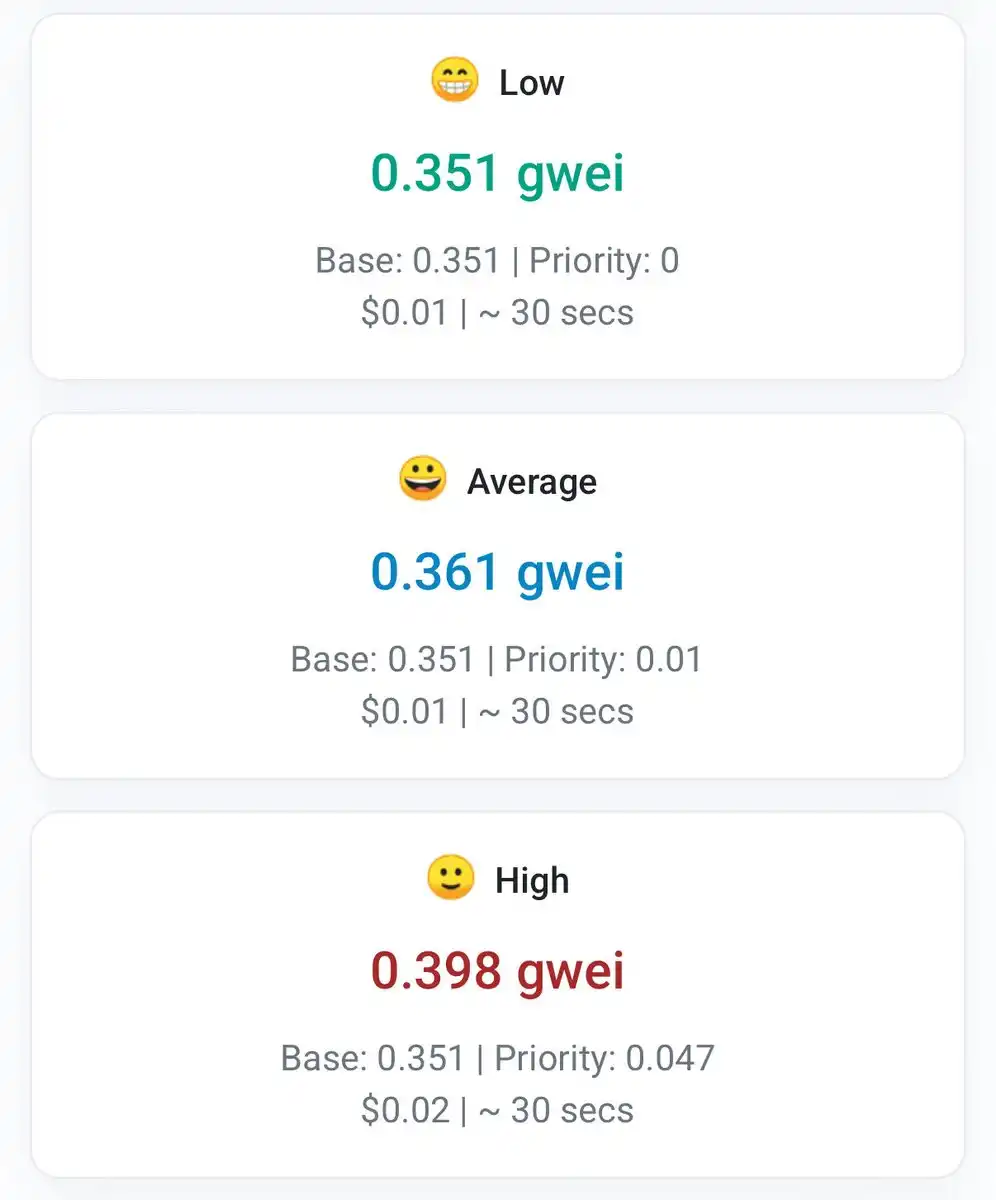
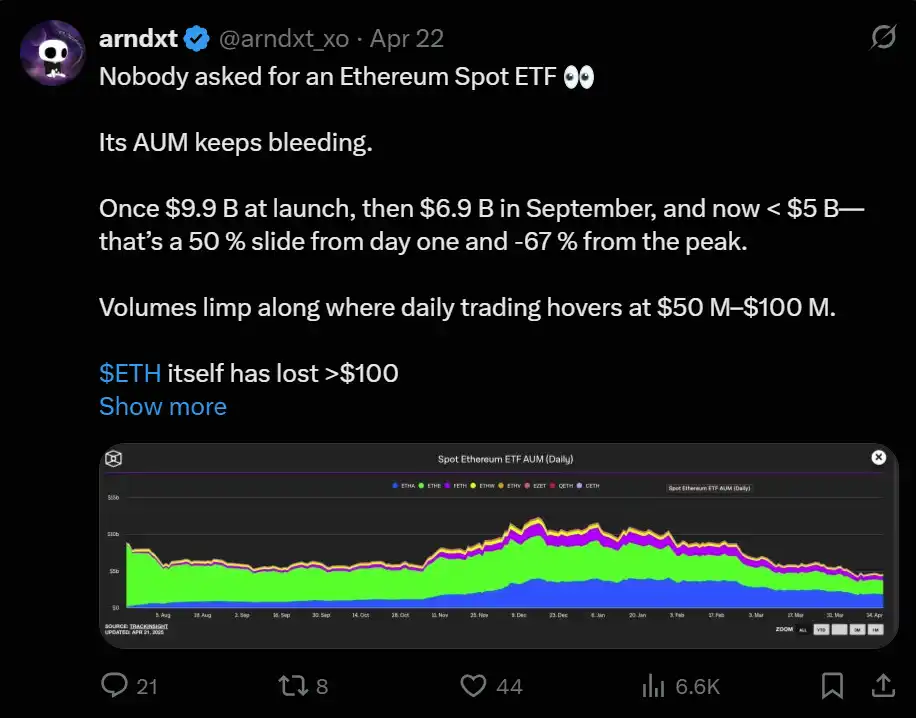
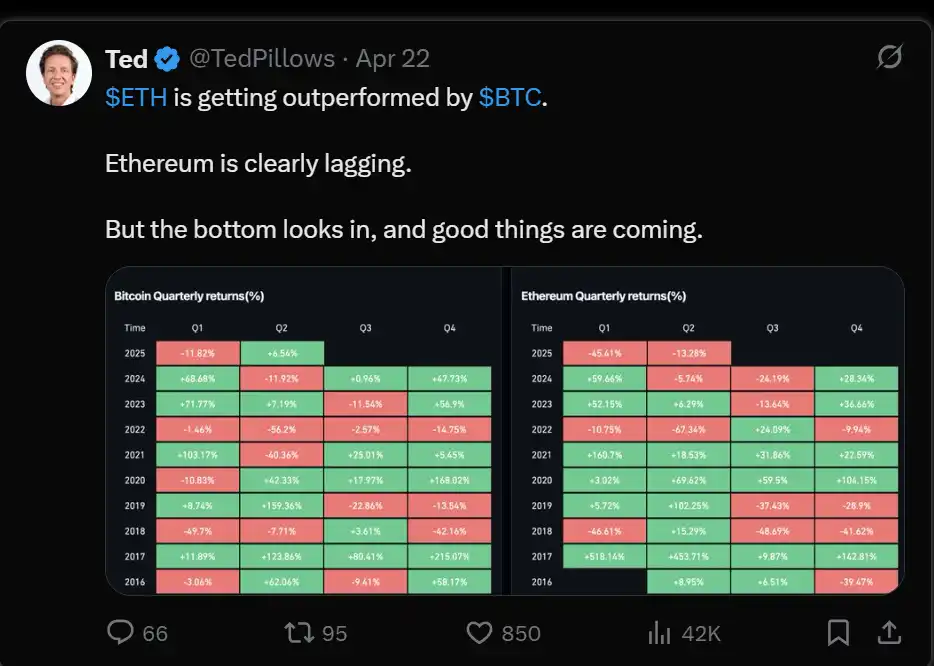
Ethereum has not seen a new all-time high in price in 2025, with the ETH/BTC exchange rate hitting a five-year low (0.02), and narratives of L2 and re-staking competition have not effectively boosted its value. At the same time, transaction fees have also dropped to the lowest level since 2020, with an average of only $0.36 per transaction.
With a surge in @solana users (daily active users reaching 3.25 million, while Ethereum is only at 410,000), daily transaction volume is far ahead (35.99 million transactions vs Ethereum's 1.13 million transactions), making many people curious: where will this world's second-largest chain go from here?
Two major upgrades that could reshape Ethereum's future
1. Upcoming Pectra Upgrade
2. Vitalik's proposal to use RISC-V technology to replace the existing EVM
Pectra Upgrade (Expected to launch on May 7, 2025)
The Pectra upgrade combines the two updates that were originally separate (the "Prague" for the execution layer and the "Electra" for the consensus layer) into a comprehensive upgrade, consisting of a total of 11 EIPs, with the goal of improving Ethereum's scalability, efficiency, and security.
Three Core Improvements of Pectra
1. Enhanced Scalability
Introducing PeerDAS and Verkle Trees technology, significantly enhancing transaction processing capability
Optimizing data storage to reduce node operating costs
Hash tree technology speeds up network synchronization
2. Lower Transaction Costs
Reduced network congestion is expected to lead to a substantial decrease in Gas fees
EIP-7702 enables account abstraction, allowing users to pay Gas with stablecoins rather than just ETH
Batch transactions and custom security features improve wallet experience
3. Enhanced Staking Mechanism
EIP-7251 increases the maximum staking amount for each validator from 32 ETH to 2048 ETH, promoting institutional participation and reducing operating costs
EIP-6110 migrates staking processing for validators to the execution layer, reducing validator activation time by approximately 48 hours
RISC-V Proposal (Long-Term Disruption?)
Vitalik recently proposed a more radical idea: replacing the Ethereum Virtual Machine (EVM) with RISC-V technology, which would fundamentally change how Ethereum executes smart contracts.
What is RISC-V?
RISC-V is an open-source Instruction Set Architecture (basically the language that tells a processor how to execute commands).
Unlike Ethereum's exclusive EVM, RISC-V's advantages include:
Fully open-source and free
Widely used in mainstream computing hardware
More suitable for complex computations
More friendly to zero-knowledge proof (zk) technology
Why Replace EVM?
1. Substantial Performance Improvement:
RISC-V is expected to increase execution efficiency by 100 times.
Transaction fees will significantly decrease.
Private transactions and cross-chain functionality will become more feasible.
2. Better Support for ZK Technology:
The current zkEVM system must first convert EVM instructions to RISC-V before generating zero-knowledge proofs, resulting in a computation burden 100 to 1000 times heavier.
Native support for RISC-V will bypass this conversion step.
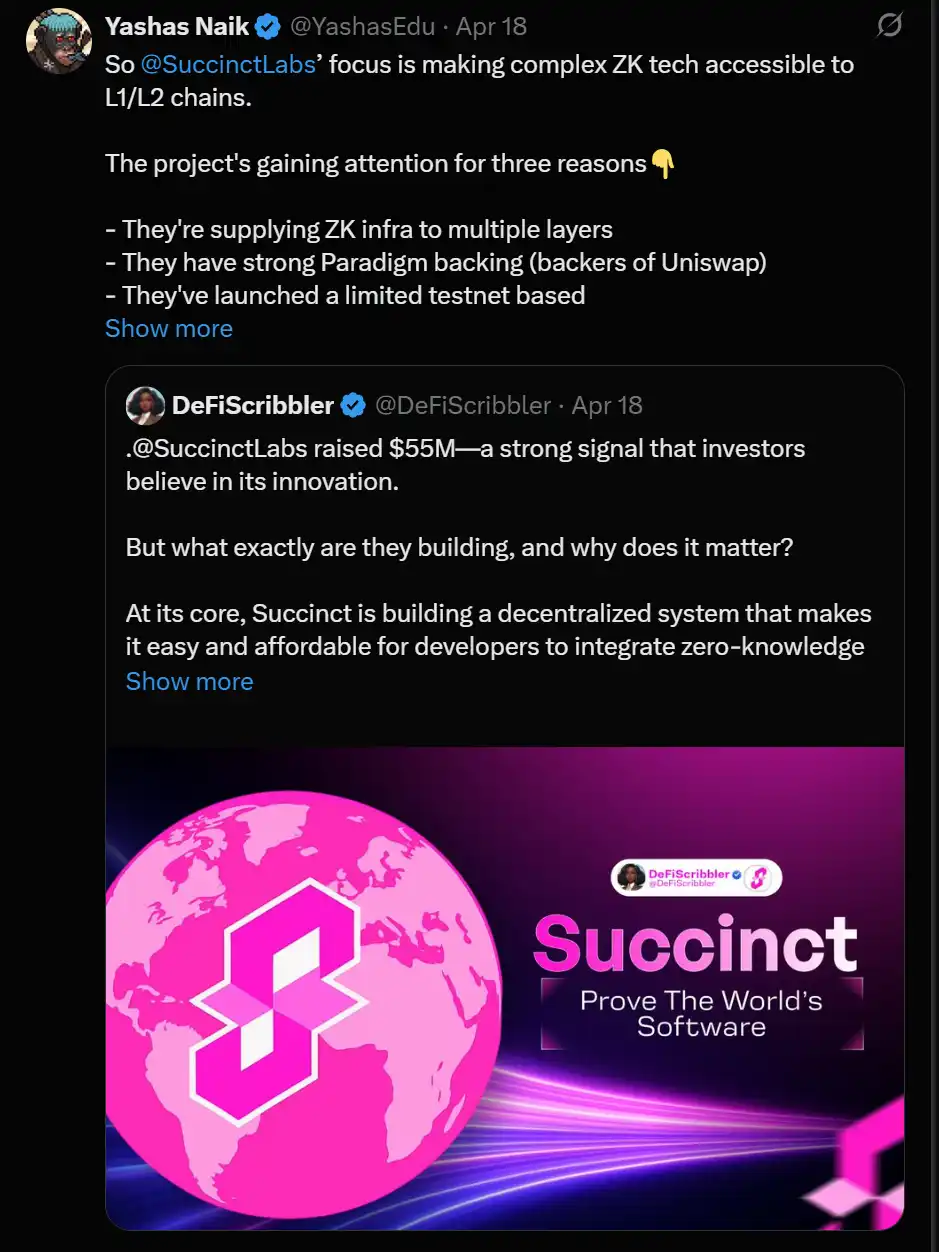
For example, @SuccinctLabs' zkVM (SP1) can directly run smart contracts using RISC-V.
Summary: In the current context where L2 narratives and re-staking fervor have failed to drive ETH performance, the Pectra upgrade and RISC-V plan may be Ethereum's new "breakthrough" key points. The former is a practical update for short-term efficiency improvements and fee reductions, while the latter is a long-term revolution of the underlying structure of smart contracts.
3. Developer Continuity:
Developers can still use Solidity or Vyper to write smart contracts
These languages only need to target RISC-V as a new backend
The user experience will see almost no significant changes
4. Implementation Timeline:
This is not an immediate implementation change. Vitalik's proposal represents a long-term vision, expected to:
Be gradually implemented, taking approximately 2-3 years
Maintain the old system (EVM interpreter) during the transition period
Ultimately make Ethereum competitive with efficient chains like Solana and Monad
What Does This Mean for Ethereum's Future?
Ethereum is facing a survival challenge: while maintaining its leading position as the primary smart contract platform, it must address the performance bottlenecks that some emerging blockchains have successfully overcome.
The Pectra upgrade addresses the urgent issues in staking, transaction costs, and user experience, while the RISC-V proposal focuses on Ethereum's fundamental execution architecture, aiming to provide a technical foundation for competing with faster public chains while retaining its security and decentralized advantages.
For users, these changes ultimately mean
Increased transaction processing speed
Lower fees
More possibilities for new applications (such as on-chain AI, privacy features)
Better scalability without sacrificing security
By advancing performance enhancement plans while preserving compatibility with existing applications, Ethereum is attempting to evolve without abandoning its core principles and ecosystem.
However, whether these changes are enough to maintain its market position in the face of faster-growing competitors remains to be seen.
If not Ethereum, then who? The latest data shows that the competitive landscape is undergoing significant changes. While the top ten DeFi protocols still operate on Ethereum, we have also seen warning signals of its diminishing lead.
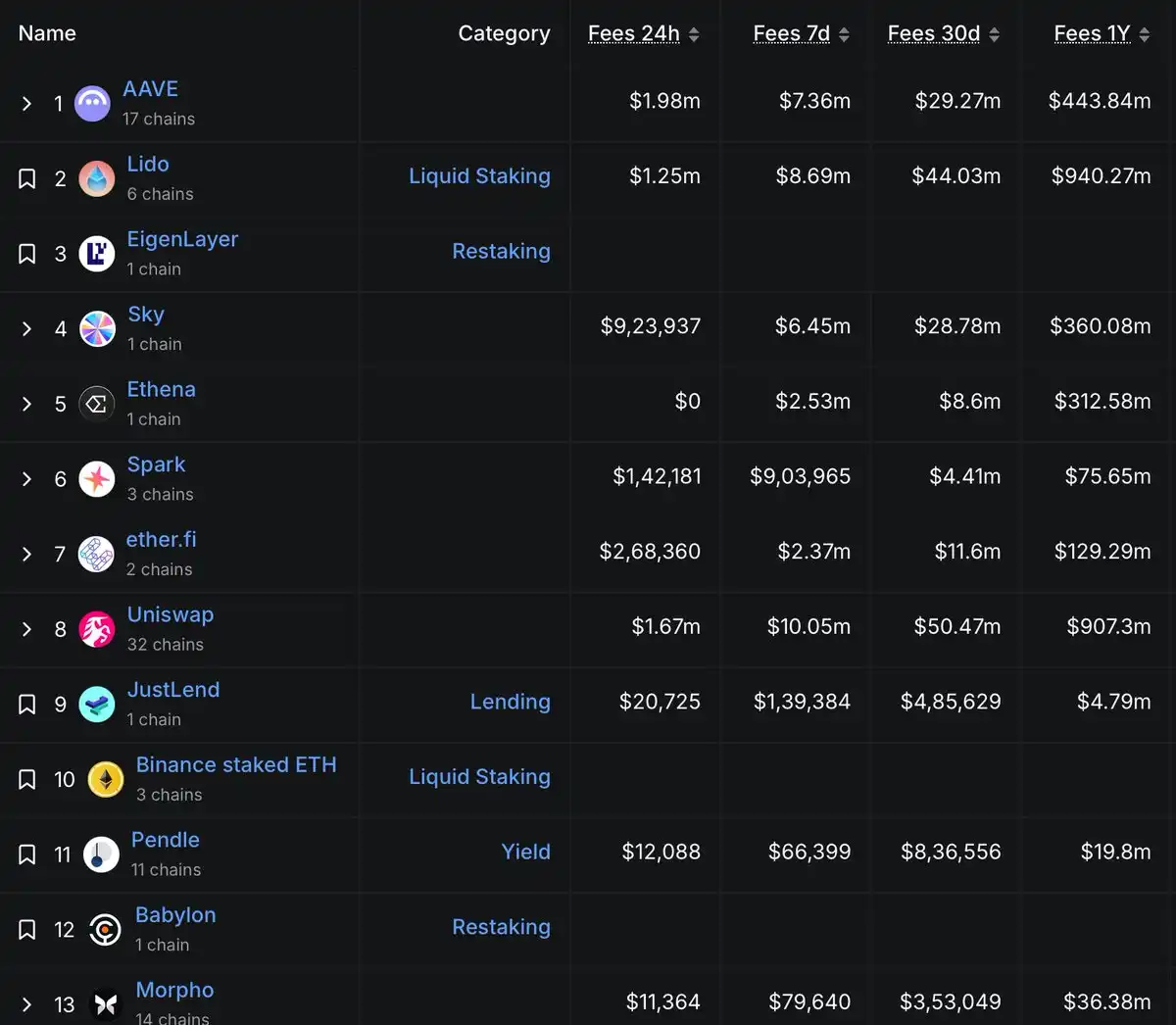
Projects like @jito_sol and @JupiterExchange are rapidly growing on other chains, and @convergeonchain (Ethena's RWA public chain) has completely moved away from the Ethereum ecosystem. These dynamics indicate that Ethereum's leading position is not set in stone, raising a key question.
What future technological breakthroughs does Ethereum need to maintain its competitiveness?
According to @nansen_ai's data, Solana recently surpassed Ethereum in total staked value (a significant milestone for the SOL ecosystem), indicating that institutions' confidence in Solana's staking infrastructure is rapidly growing.
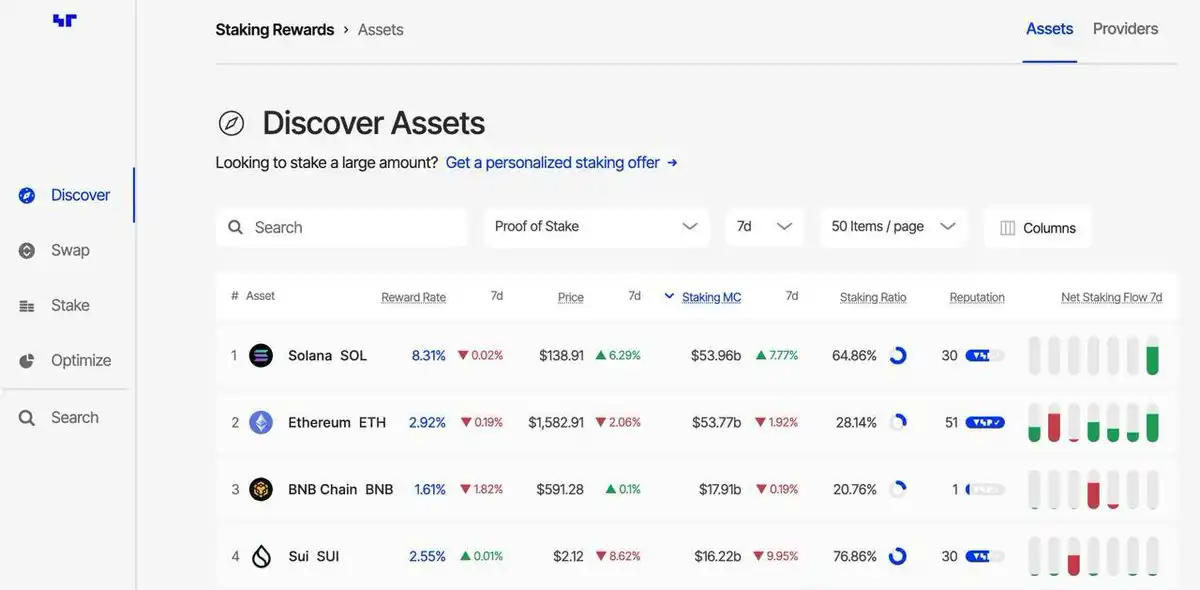
At the same time, Solana outperformed all other blockchains in first-quarter 2025 revenue performance while still maintaining extremely low transaction fees. This combination of "high revenue + low user cost" showcases Solana's efficient economic model.
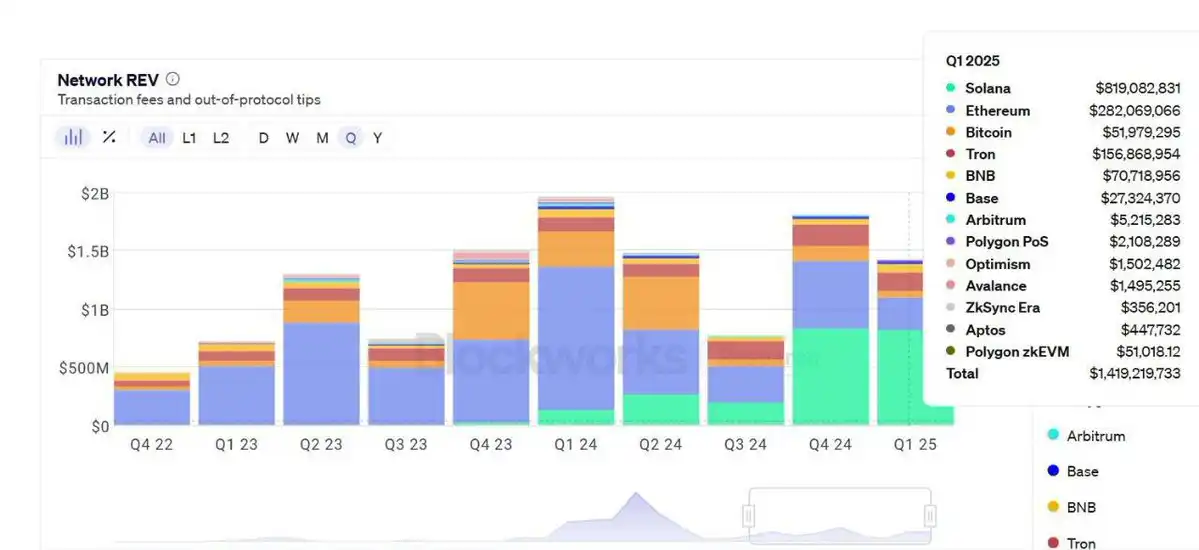
These advancements undoubtedly put greater pressure on Ethereum's technological roadmap. Despite the Pectra upgrade and the potential RISC-V transition aimed at addressing Ethereum's scalability and cost issues, Solana, with its current architecture, continues to attract market attention and share.
Source: Original Article Link
You may also like

SharpLink CEO: How to understand that Ethereum developers have just surpassed 1 million?

Morning Report | MiCA grace period expires on July 1; Kalshi's trading volume in the first week of the World Cup breaks $5.1 billion, setting a record

The foundation of SpaceX's trillion-dollar valuation: Who is dividing Musk's annual capital expenditure of tens of billions?

How to exit after asset tokenization?

The stablecoin positioning battle escalates: When compliance is just a ticket to entry, will USD1 become the biggest winner?

A16Z: The sun bears witness, SpaceX is worth 7.5 trillion

Mergers and acquisitions in the cryptocurrency market are exceptionally active

Concerns Behind the Binance Customer Service Controversy

SpaceX Stock Prediction After the IPO: Can SPCX Reach $200 Before QQQ Inclusion?

Congratulations to Carl Moon on His Historic Ferrari Challenge Le Mans Podium Triumph
Crypto influencer and racing enthusiast Carl Moon finished third in the Ferrari Challenge Le Mans Coppa Shell class, marking his best result of the year. As his racing partner and sponsor, WEEX celebrates this remarkable achievement and continues to lead crypto’s journey beyond boundaries, uniting the innovation of digital assets with the passion of motorsport.
Can the CLARITY Act Become Law by July 4? Everything You Need to Know About the Final Battle

France vs Senegal World Cup 2026: Mbappe’s New Era Begins Against a Historic Rival
What is the connection between Huang Zheng of Pinduoduo and blockchain?

Morning Report | Prediction market platforms like Kalshi and Polymarket jointly sue Kentucky over 14.25% trading tax; Bridgewater founder discusses decision-making in the AI era: principled thinking should run parallel to AI, human insight remains irre...

If the AI bubble has already burst, who will truly remain?

Paul Graham: How to Make a Billion Dollars

After 18 years, blockchain has finally started to head towards the main channel
Claude enforces "facial recognition for household registration," starting in July, no ID card means no access?
SharpLink CEO: How to understand that Ethereum developers have just surpassed 1 million?
Morning Report | MiCA grace period expires on July 1; Kalshi's trading volume in the first week of the World Cup breaks $5.1 billion, setting a record
The foundation of SpaceX's trillion-dollar valuation: Who is dividing Musk's annual capital expenditure of tens of billions?
How to exit after asset tokenization?
The stablecoin positioning battle escalates: When compliance is just a ticket to entry, will USD1 become the biggest winner?
A16Z: The sun bears witness, SpaceX is worth 7.5 trillion


