
Cryptocurrency Derivatives Trading Hedge Guide: Gate.io Derivatives Trading Risk Management Unveiled


Source: Gate.io
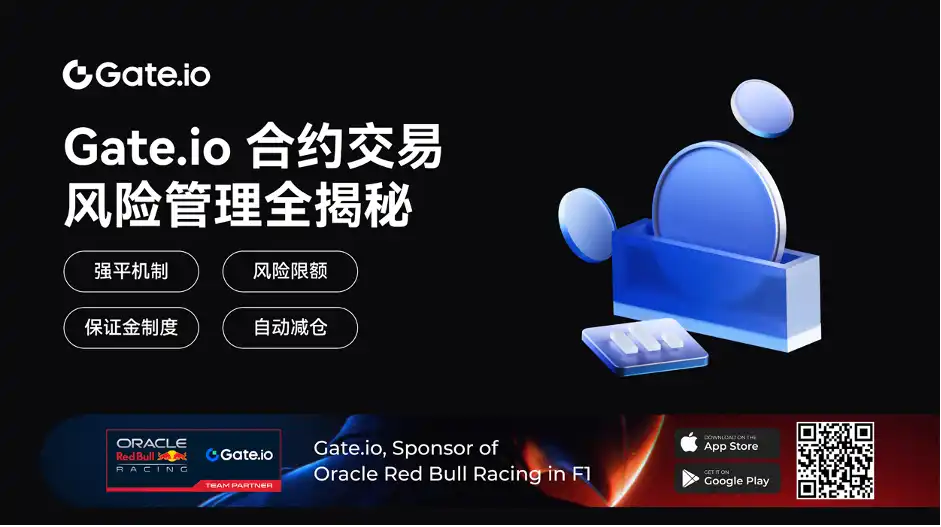
In the cryptocurrency field, contract trading has become an important tool for many investors to pursue high returns due to its high leverage and complexity. However, high leverage also means high risk, as a small market fluctuation can lead to significant losses for investors. Therefore, risk management is crucial in contract trading. It is key for investors to protect their assets and for trading platforms to ensure user safety.
As a leading global digital asset trading platform, Gate.io has accumulated extensive experience in contract trading through its deep technical expertise and professional operations team. The platform provides users with an efficient and convenient trading environment and is committed to safeguarding investors' trading security through a series of comprehensive risk management measures.
This article will delve into Gate.io's risk management strategies in contract trading, covering various aspects such as the liquidation mechanism, risk limits, margin system, and automatic deleveraging mechanism. It will comprehensively explain how Gate.io has built a secure and reliable trading ecosystem to support and protect users.
Liquidation Mechanism: Key Line of Defense for Risk Management
In contract trading, the liquidation mechanism is a key line of defense to maintain market stability and user safety. When a user's margin is insufficient to maintain their position, the liquidation mechanism automatically triggers to prevent further losses. While this mechanism may seem simple, it involves complex risk control logic.
Gate.io has introduced a tiered liquidation mechanism. When a user triggers liquidation and the risk limit is in a high tier, the platform does not immediately close their entire position but instead prioritizes the liquidation of part of the position. The core of this mechanism is to gradually reduce the position, lower the user's leverage, and alleviate margin pressure.
The tiered liquidation mechanism reduces users' direct losses and provides users with more opportunities to adjust their positions. After part of their position is liquidated, users can choose to add margin, adjust their position, or continue holding the remaining position based on market trends and their financial situation.
For liquidation price calculation, Gate.io uses an advanced mark price mechanism. The mark price is the current fair price in the contract market, calculated based on the spot index price and premium index. This price calculation method effectively avoids forced liquidation due to momentary market fluctuations. For example, in the event of a brief and significant market fluctuation, the mark price filters out this disturbance to ensure the rationality of the liquidation price.
Risk Limit: Precisely Managing Trading Risk
The risk limit is an important risk management tool designed to reduce potential risk from market volatility by setting a cap on user position size. In futures trading, the risk limit effectively prevents drastic market price swings resulting from large-scale forced liquidation.
The Gate.io risk limit mechanism is multi-dimensional, taking into account various factors such as trading pairs and market volatility. Additionally, the platform sets differentiated risk limits based on the volatility of different trading pairs.
For example, for stablecoin contracts with low volatility, the risk limit will be relatively relaxed; whereas for popular cryptocurrency contracts with high volatility, the risk limit will be more stringent. This differentiated design not only ensures the overall risk control of the platform but also considers users' individualized needs.
Currently, Gate.io supports users to manually set risk limits. Through this feature, users can adjust risk limits manually based on their risk tolerance and trading strategies. Users can also flexibly set risk limits according to their financial strength, trading experience, and risk preferences to better control trading risk.
Margin System: The Foundation of Fund Security
Margin is the capital required from users when opening a position in futures trading, and initial margin is the minimum deposit required to enter a trade. Initial margin is crucial in futures trading as it not only ensures users have enough funds to cover potential losses, reducing the risk to the trading platform and other users, but also serves as collateral to help users maintain positions during market fluctuations. Moreover, it allows users to control larger positions with less capital, amplifying both potential gains and risks.
Gate.io has introduced a tiered margin ratio mechanism, where the platform sets different margin ratios based on the user's position size. The core of this design is to reduce users' financial pressure and encourage them to manage position sizes reasonably. For instance, when a user's position size is small, the margin ratio is relatively low, allowing users to participate in trading with less capital; as the position size increases, the margin ratio will correspondingly rise to ensure sufficient risk coverage.
To strengthen the margin system, Gate.io has established a risk reserve fund mechanism. The risk reserve fund is a portion of funds extracted from Gate.io's profits and is used to cover potential user losses in extreme market conditions. This mechanism provides additional protection to users so that even in the event of extreme market fluctuations, users need not worry about suffering greater losses due to platform risk.
Auto-Deleveraging (ADL): Balancer in Extreme Market Conditions
Auto-Deleveraging (ADL) is a mechanism where in the event of extreme market conditions or force majeure factors leading to insufficient insurance funds, a forced liquidation mechanism is implemented against counterparties to control the overall platform risk.
Gate.io's Automatic Deleveraging Mechanism adopts a multidimensional deleveraging strategy. When selecting deleveraging targets, the platform will comprehensively consider factors such as user account risk, position risk, and position return rate. For example, for users with higher risk, the platform will prioritize deleveraging their positions; whereas for lower-risk users, deleveraging will be avoided as much as possible.
Gate.io's Automatic Deleveraging Mechanism is highly transparent. Users can monitor their position risks in real time through the platform's provided automatic deleveraging indicator. When a user's position is selected to enter the deleveraging queue, the platform will notify the user through the indicator. Users can check their position in the queue based on the indicator, allowing them to adjust their positions or reduce leverage promptly.
Gate.io Builds a Comprehensive Risk Management Framework
From the above analysis, Gate.io's advantage in contract trading risk management is evident. The platform has built a comprehensive and multi-level risk management system, covering mechanisms such as liquidation, risk limits, margin system, and automatic deleveraging. These measures work together to form an organic whole, effectively addressing complex and changing market conditions, ensuring the security of both the platform and its users' trades.
Gate.io has implemented a series of advanced risk control technologies, including the mark price mechanism and risk limit mechanism. These technical means can not only accurately reflect real-time market conditions but also improve the efficiency and accuracy of risk control. Empowered by technology, Gate.io demonstrates outstanding risk management capabilities in a complex and ever-changing market environment.
It is worth mentioning that Gate.io has a professional risk management team composed of experienced financial experts and technical specialists. They can monitor market dynamics in real time and adjust risk control strategies promptly. The professional risk management team is the core strength of the platform's stable operation. With rich experience and professional knowledge, they provide solid guarantees for the platform and its users.
Rational Trading with Risk Management Prominence
While contract trading offers high-profit potential, it also comes with high risks. Therefore, cryptocurrency investors must prioritize risk management when participating in contract trading. With its robust risk management measures, Gate.io provides users with a reliable trading environment. Gate.io urges investors to maintain rationality when engaging in contract trading, to fully understand the risks, and to operate cautiously based on their risk tolerance.
For cryptocurrency investors, choosing Gate.io not only means experiencing excellent risk management capabilities but also enjoying high-quality trading services. On the journey to explore the world of cryptocurrency, Gate.io has always been a reliable partner for users. The platform is committed to providing investors with a secure and efficient trading environment, helping them steadily advance towards their investment goals amidst market fluctuations.
This content does not constitute any offer, solicitation, or advice. You should always seek independent professional advice before making any investment decision. Please note that Gate.io may restrict or prohibit all or partial services from users in restricted areas. Please read the user agreement for more information.
This article is contributed content and does not represent the views of BlockBeats
You may also like

WEEX Labs Lands at Dutch Blockchain Week: A Disruptive Crypto × AI Conversation Sets Sail in Amsterdam

SK Hynix Reportedly Plans U.S. ADR Listing as Early as August, With SEC Approval Possible in Late June
SK Hynix may pursue a U.S. ADR listing as early as August, with SEC approval reportedly possible in late June amid strong AI chip supply chain demand.

SpaceX vs Tesla vs xAI: Which Elon Musk Trade Has the Biggest Upside in 2026?

OpenAI Reveals It Has Confidentially Submitted an S-1 to the SEC, Keeping the Door Open for a Future IPO
On June 9, according to an OpenAI announcement, the company recently confidentially submitted a draft S-1 registration statement to the U.S. Securities and Exchange Commission (SEC), beginning the preliminary compliance process for a potential initial public offering. OpenAI said it chose to disclose this proactively because it expected the news might leak; however, the company has not yet set a specific listing timeline, and related arrangements may still take some time.

Latest research from 13 top universities including Cornell University: The current state, challenges, and misconceptions of the fusion of Crypto and AI
Deconstructing Anthropic: The Best AI Company, Possibly Also a Type of Organizational Invention
Apollo and Blackstone Reportedly Back $35 Billion Anthropic Chip Financing as Deal Details Remain Unclear
On June 9, according to currently available news alerts, Apollo and Blackstone Group participated in a $35 billion financing for an Anthropic “chip project.” Based on the original wording of the report, the funding has already been raised, but public information remains limited. The financing structure, use of proceeds, project entity, and whether Apollo and Blackstone participated through equity, debt, or project financing have not yet been disclosed.

Humanity Protocol Security Incident Escalates: More Than $31 Million Stolen From Related Addresses as Attacker Continues Selling H for ETH
On June 9, according to monitoring by Onchain Lens, more than $31 million has been stolen from addresses linked to Humanity Protocol, and the attack is still ongoing, with the hacker continuously swapping H tokens for ETH. Project founder Terence Kwok later confirmed the security incident on X, saying the issue involved a private key leak.

Bloomberg: As Bitcoin Weakens, Stablecoins and RWA Continue to Drive Expansion in Crypto Businesses
In June, Bloomberg reported that despite Bitcoin falling below $60,000 last week, wiping out about $235 billion in market value within seven days, and dropping close to 50% from last year’s peak, some core businesses in the crypto industry are still expanding, mainly in stablecoins, real-world asset tokenization (RWA), payments, and infrastructure. The report also noted that overall altcoin activity has contracted significantly: altcoin market capitalization has fallen from a peak of about $431 billion in November 2021 to around $170 billion, and among the tens of millions of tokens issued in recent years, fewer than 1,700 still maintain meaningful trading activity.

Galaxy Deep Research Report: How Hyperliquid's HIP-4 Upgrade Changes the Landscape of Prediction Markets?
Binance Research: RWA Market Expected to Expand Nearly 6x from Early 2025, with Public Equities and Onchain Payments Heating Up Together
In June, Binance Research said in its monthly market report that the real-world asset (RWA) market is expected to grow by about 589% from the beginning of 2025. Bond- and money market fund-related RWA expanded by about $6.5 billion, up 83% year over year, while publicly traded equity RWAs grew by about 422%. The report also noted that monthly crypto debit card transaction volume exceeded $747 million in May, up 48.6% year to date.

Japan to Assess a Framework for Yen Stablecoins and Crypto ETFs as Asia’s Compliant Payments Narrative Heats Up
Recently, according to the original report, Japan is considering the launch of yen stablecoins and cryptocurrency ETFs. Public information remains limited at this stage, and there is still no complete policy text, regulatory draft, or clear implementation timeline, so this is better characterized as a “policy discussion” rather than formal implementation. The original wording also noted that advancing stablecoin regulation in Asia is driving XRP usage and supporting growth in the XRPL ecosystem. However, based on currently available public information, there is not enough evidence to directly establish a clear causal relationship between this round of discussion in Japan and XRP or XRPL.

ZachXBT: Humanity private key leak and abnormal surge in H token should be viewed separately
On June 9, according to related disclosures, on-chain investigator ZachXBT posted an update on Humanity’s roughly $31 million security incident, saying that after further analyzing fund flows, he currently tends to believe the project team was not involved in an “inside job” or a self-staged attack. According to him, the official explanation about the private key leak was broadly accurate, but before the token unlock, the price of H had been artificially pushed higher, and the hacker later took advantage of that market environment; therefore, the private key leak and the earlier abnormal price pumping should be regarded as two separate and independent events. This reframing has shifted the market’s understanding of the nature of the incident. Earlier discussion around Humanity had focused on whether the team directly participated in the attack or used the security incident to cover up internal operations. ZachXBT’s latest remarks shift the focus from “whether it was self-theft” to “whether there were pre-unlock market structure issues.” He also questioned whether the team may have.

Morning Report | OpenAI has submitted an S-1 registration statement draft to the U.S. SEC; Morpho completes $175 million financing

Morning Report | BitMine increased its holdings by 126,971 ETH last week; trader Eugene announced his exit from the crypto market

Wang Chuan: How can one not feel anxious after the neighbor Old Wang made thirty times profit by investing in storage stocks? (Seven) - A quarter-century cycle
Cryptocurrency CEXs are flocking to sell US stocks, and traditional brokerages are facing an "uninvited guest."
$75 billion in foreign capital has fled, and South Korean retail investors have absorbed it all using leverage
WEEX Labs Lands at Dutch Blockchain Week: A Disruptive Crypto × AI Conversation Sets Sail in Amsterdam
SK Hynix Reportedly Plans U.S. ADR Listing as Early as August, With SEC Approval Possible in Late June
SK Hynix may pursue a U.S. ADR listing as early as August, with SEC approval reportedly possible in late June amid strong AI chip supply chain demand.
SpaceX vs Tesla vs xAI: Which Elon Musk Trade Has the Biggest Upside in 2026?
OpenAI Reveals It Has Confidentially Submitted an S-1 to the SEC, Keeping the Door Open for a Future IPO
On June 9, according to an OpenAI announcement, the company recently confidentially submitted a draft S-1 registration statement to the U.S. Securities and Exchange Commission (SEC), beginning the preliminary compliance process for a potential initial public offering. OpenAI said it chose to disclose this proactively because it expected the news might leak; however, the company has not yet set a specific listing timeline, and related arrangements may still take some time.
Latest research from 13 top universities including Cornell University: The current state, challenges, and misconceptions of the fusion of Crypto and AI
Deconstructing Anthropic: The Best AI Company, Possibly Also a Type of Organizational Invention


