
Is USDT's cross-chain version, USDT0, reliable?


Original Author: 0xTodd, Partner at Nothing Research
Wasn't Uni supposed to restart liquidity mining on 4.15? This time it involves 12 pools, many of which are related to $USDT0. So, I'll take this opportunity to talk about USDT0.
Firstly, What is USDT0?
In simple terms, USDT0 is the cross-chain version of USDT. The parent asset USDT exists on ETH and, through Layer0, can cross-chain to other chains, becoming USDT0.
Supporters of USDT0 can also cross among themselves, for example, ETH-Arb-Unichain-BearChain-megaETH, and so on.
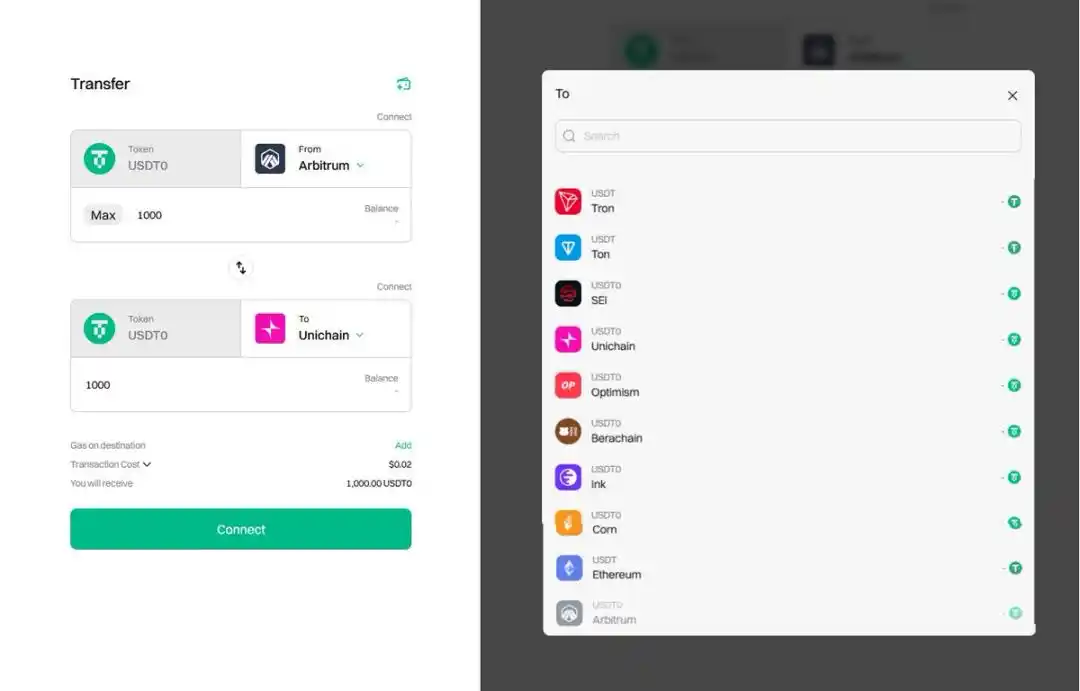
Who is Behind USDT0?
This is the most tricky part, and it took me a long time to figure it out.
Behind this project, USDT0, is a collaboration of 1+3:
1. Led by Everdawn Labs;
2.1 Built on Layer0 technology;
2.2 Endorsed by Tether;
2.3 Endorsed by the INK public chain (issued by Kraken).
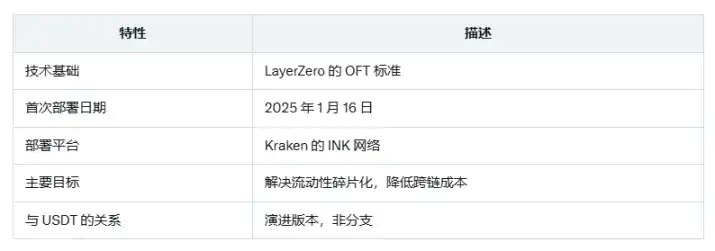
However, Everdawn Labs is a complete mystery online. I strongly suspect that it is a front for Tether. This is quite consistent with their style:
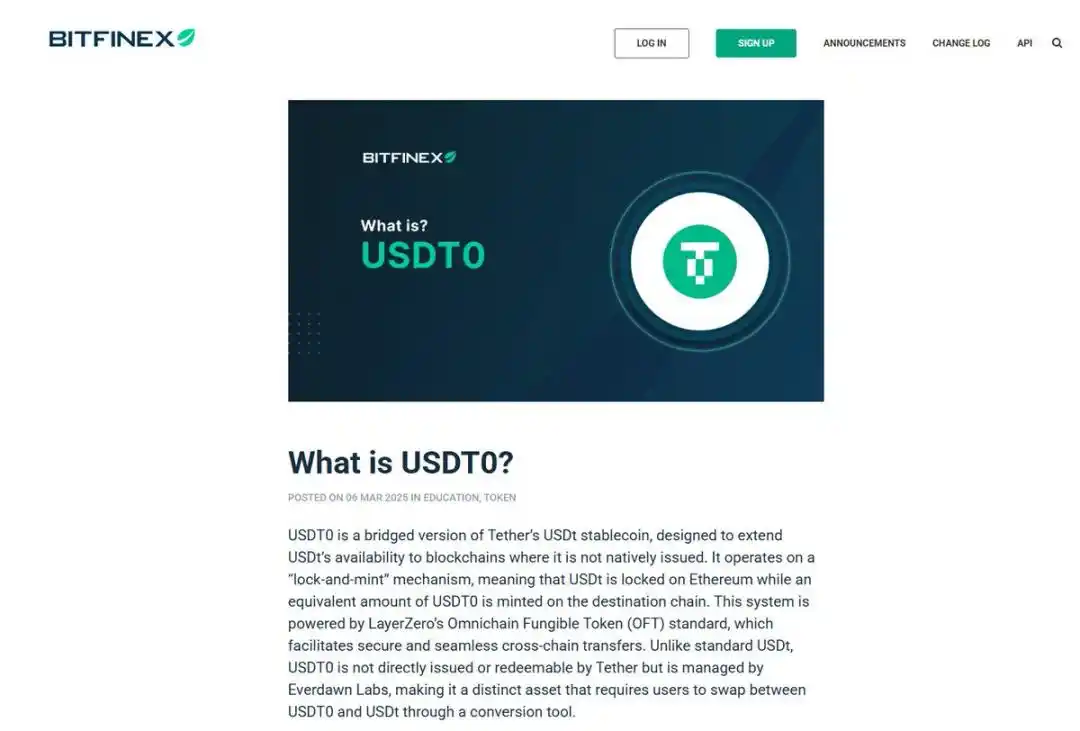
If nothing goes wrong—everyone benefits from the multi-chain convenience of USDT; if something goes wrong—then it's Everdawn Labs' fault, not Tether's. One reason for this speculation is that after the launch of USDT0 this year, the Tether team immediately expressed their support, followed by a dedicated article by Bitfinex. Without a strong relationship, they (BF and Tether) would not provide this kind of support.
What's the Evaluation?
In my opinion, if Tether is personally involved in this bridge, it's definitely a great move. This way, each chain's USDT can cross without loss, avoiding the need for various awkward third-party cross-chain bridges.
However, my level of trust in Layer0 is limited. In the past, there have been numerous high-profile cross-chain bridge failures, from multichain to thorchain. The technology behind cross-chain transactions is fundamentally simple, mainly relying on multi-signature setups. In the past, USDT used official bridges and did not utilize Layer0, a third-party bridge.
Official bridges are generally considered more secure, but they suffer from liquidity fragmentation. For example, if you want to move a large amount of capital from Arb to OP in a flash loan manner, you would need to first go back from Arb to ETH and then proceed to OP, which incurs additional costs for a faster transaction. PS: Not to mention chains like Sei, where even official bridge transactions incur fees for entry and exit.
On the other hand, if you opt for the USDT0 solution, Arb can directly move to OP in a flash and without loss. PS: Of course, there is a historical issue on OP where the USDT used is an older version of the ETH cross-chain version, while USDT0 represents the newer version. Thus, although theoretically viable to move funds from Arb to OP, in practice, it has been futile in the past. This is just an illustrative example.
New public chains, as they support USDT0 from the outset and lack historical issues, offer much higher usability. However, Tether itself is reluctant to directly engage in building this bridge and insists on sending a proxy like Everdawn Labs, which is a bit...
In the past, when I provided liquidity for $UNI on ETH, I only had to consider the minor third-party risks of Tether and Uniswap. Now, I have to bear an additional 4 risks: Everdawn going rogue, L0 going rogue, Unichain going rogue, USDT0 supporting other N chains, and each one potentially going rogue.
It sounds a bit overwhelming.
You may also like

Can the CLARITY Act Become Law by July 4? Everything You Need to Know About the Final Battle

How to exit after asset tokenization?

The foundation of SpaceX's trillion-dollar valuation: Who is dividing Musk's annual capital expenditure of tens of billions?

France vs Senegal World Cup 2026: Mbappe’s New Era Begins Against a Historic Rival

SharpLink CEO: How to understand that Ethereum developers have just surpassed 1 million?

Morning Report | MiCA grace period expires on July 1; Kalshi's trading volume in the first week of the World Cup breaks $5.1 billion, setting a record

What is the connection between Huang Zheng of Pinduoduo and blockchain?

Morning Report | Prediction market platforms like Kalshi and Polymarket jointly sue Kentucky over 14.25% trading tax; Bridgewater founder discusses decision-making in the AI era: principled thinking should run parallel to AI, human insight remains irre...

If the AI bubble has already burst, who will truly remain?
Paul Graham: How to Make a Billion Dollars

After 18 years, blockchain has finally started to head towards the main channel
Claude enforces "facial recognition for household registration," starting in July, no ID card means no access?

On the day of SpaceX's IPO, the first real test of the three perpetual mechanisms

Value Distribution of Stablecoins
Galaxy Deep Dive: Is the Bitcoin Four-Year Cycle Still Valid?

SpaceX IPO, Nvidia, and Bitcoin: Why Traders Are Watching More Than Just Crypto in 2026

The other side of Musk's trillion-dollar fortune: 85% cannot be sold

The U.S. government prohibits foreigners from using Fable 5, Anthropic issues a rebuttal
Can the CLARITY Act Become Law by July 4? Everything You Need to Know About the Final Battle
How to exit after asset tokenization?
The foundation of SpaceX's trillion-dollar valuation: Who is dividing Musk's annual capital expenditure of tens of billions?
France vs Senegal World Cup 2026: Mbappe’s New Era Begins Against a Historic Rival
SharpLink CEO: How to understand that Ethereum developers have just surpassed 1 million?
Morning Report | MiCA grace period expires on July 1; Kalshi's trading volume in the first week of the World Cup breaks $5.1 billion, setting a record


