
Solana Stake Reward Adjustment Proposal, What Impact on SOL Price?

Original Author: David Grider, Partner at FinalityCap
Translation: zhouzhou, BlockBeats
Editor's Note: This article discusses a proposal regarding the adjustment of Solana staking rewards. The proposal's arguments have encountered issues, particularly concerning the impact of high staking rewards on DeFi yields and the effect of inflation on selling pressure. David counters by suggesting that the relationship between staking rewards, network security, and market demand is closely intertwined, and that staking rewards should be determined by the market.
The following is the original content (slightly reorganized for readability):
I am very concerned about the inflation reduction proposal SIMD-0228 put forth for Solana, especially the current version proposed by TusharJain and kankanivishal from multicoincap, as well as MaxResnick1, particularly without addressing some critical risks and issues.
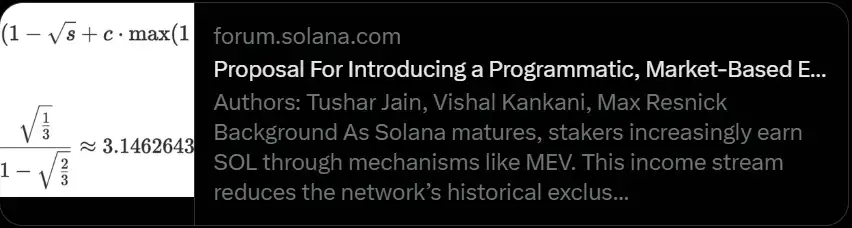
After listening to the latest Solana Validator Community Call, I believe that the arguments made for implementing this change have significant flaws.

Here is a summary of the arguments presented, which I will refute in detail in upcoming tweets:
1: High staking rewards are detrimental to DeFi yields
2: Inflation increases selling pressure and should be compared to network fees
3: High staking rewards reduce ETF demand
4: Staking rewards do not offer U.S. tax optimization as capital gains do
5: Higher staking rewards do not lead to a higher price
6: The staking formula will optimize the staking ratio, thus addressing security concerns (in my view, this is a critical security risk and a flawed approach)
Argument 1: A high staking rate is detrimental to DeFi yields.
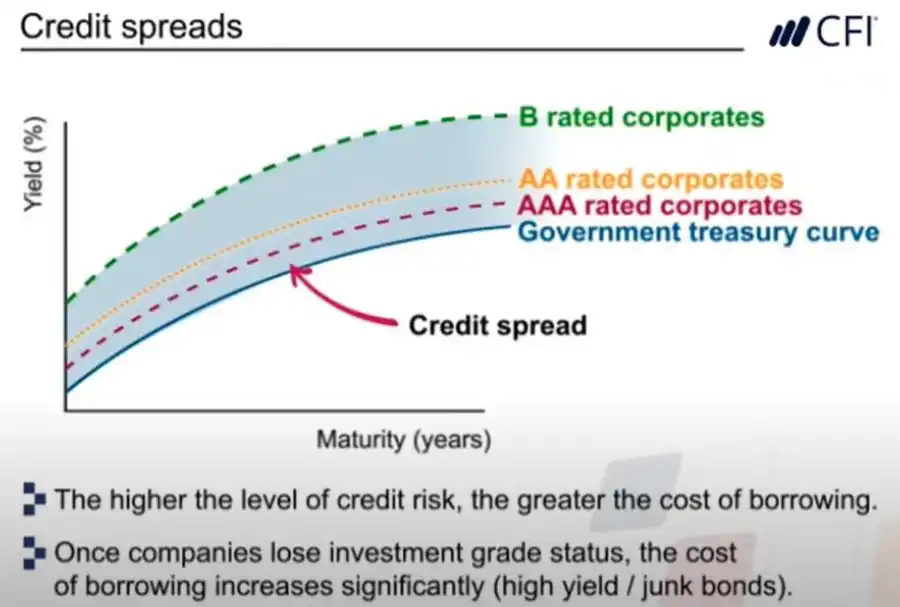
Refutation 1: SOL staking is Solana's risk-free rate. Just as a higher risk-free rate on government bonds leads to an increase in rates on the credit curve, higher staking rewards will drive up DeFi rates and profits.
Point 2: Inflation has increased selling pressure, which should be compared to fees.
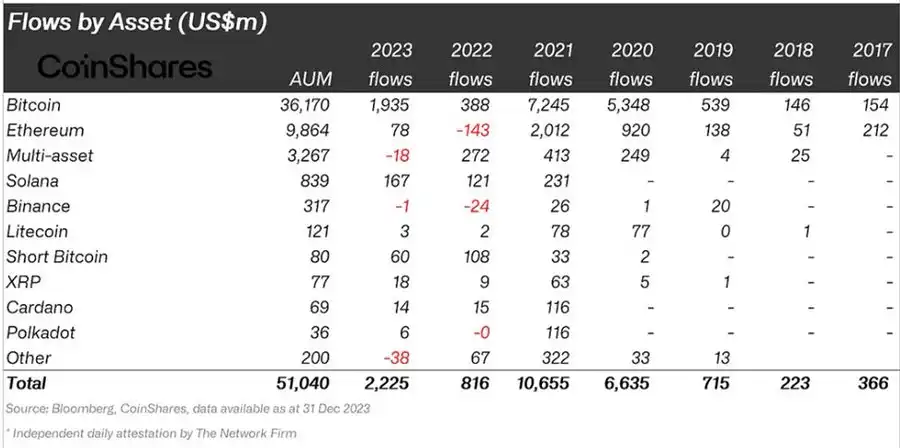
Rebuttal 2: This is not valid, just like unlocking does not necessarily bring selling pressure, whether to sell depends on the holder's choice. Validators can choose to restake their staking rewards. The impact of inflation on liquidity is smaller compared to other supply factors. Instead of comparing selling pressure to fees, it is better to compare it to fund flows. One can look at the Solana ETP fund flows as a measurable metric, but demand from funds and individuals is larger and more significant.
Point 3: High staking rewards have reduced the demand for ETFs.
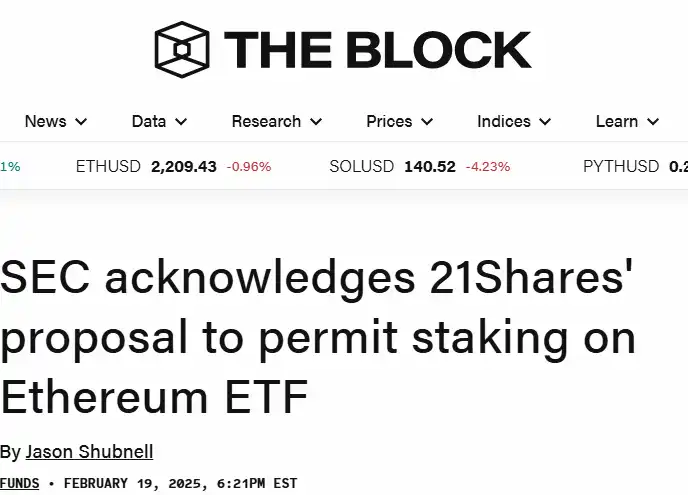
Rebuttal 3: Just because someone has used this point to explain the softness in ETH ETF demand does not mean it applies to Solana as well. Look at many of Europe's SOL ETPs; they take the entire staking yield and do not charge fees, attracting significant inflows of funds (as mentioned above). Moreover, US ETFs are also nearing approval for staking, so in the long run, this point does not hold.
Point 4: Staking rewards are not as tax-optimized as capital gains.
Rebuttal 4: Solana is a globally decentralized network; we should not optimize solely for US tax policies as tax policies can change at any time. This is similar to how equity investors would overlook the impact of tax changes on stock valuation.
Point 5: Higher staking rewards will not lead to a higher price.
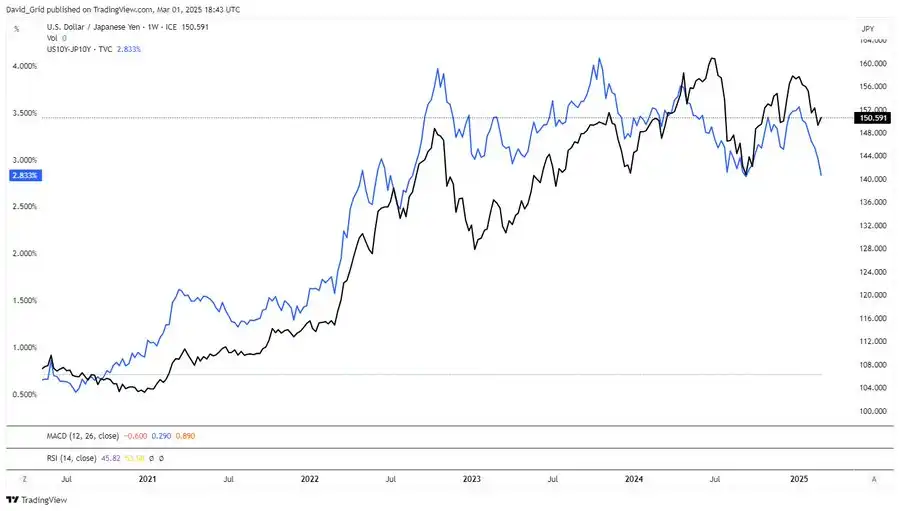
Rebuttal 5: Real-world evidence proves this point invalid. Just look at how traditional currencies are priced. The valuation of one currency against another is usually based on the interest rate differential. Higher rates typically lead to a stronger currency. Here is a chart showing the USD/JPY against the US 10-year Treasury and Japanese 10-year Government Bond yield differentials as an example.
Point 6: The staking formula will optimize the staking ratio, thus addressing security concerns.
Rebuttal 6: It also needs to optimize the number of validators and staking distribution. Running Solana validators is costly, and the number of validators has been decreasing.

Rebuttal 6 (Continued): An analysis that must be conducted in order to move forward safely with this proposal, but what I have not seen yet is:
Simulating how many of the currently active small validators would become unprofitable and drop out under the new proposal. This needs to be analyzed under different network activity and SOL price assumptions, especially in a bear market scenario considering a 80% drop in both MEV and base fees, as well as prices. Then, looking at the current Solana validator list, see how many current validators would become unprofitable and drop out under these scenarios.
We can discuss how many validators Solana needs. It may not need to artificially inflate to 100,000 like ETH, but we also do not want Solana to become a Cosmos chain with only 100 validators.
Additionally, because proponents have brought up the argument of U.S. tax implications to drive this proposal, we are also not sure what the SEC's decentralization test standards are, so it might be desirable to keep the validator count above 1,000 to keep SOL as a commodity.
In conclusion, unless someone has at least done this analysis, this proposal should not go through.
The proposal indeed raises the right question: how much inflation is needed? But before making a change, there are other questions we need to answer. I do agree that this number could be lower and should be more dynamic. Just as a company does not need to pay a fixed amount to suppliers or provide a fixed return to financiers, the market should determine this number, so I support this direction. We just need to slow down, do more work to understand its impact.
This could actually be a high-level approach to addressing this risk.
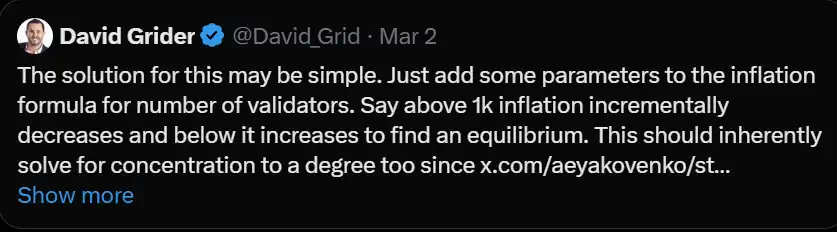
My sincere suggestion is, we should not assume and generalize its impact. Data analysis should be done, displaying all assumptions and data.
You may also like

Pantera Capital Partner: How Tokenization is Restructuring the Private Equity and Early Investment Ecosystem?

New York Proposes Stricter Stablecoin Issuer Rules Aligned With Federal GENIUS Act
NYDFS proposed stricter stablecoin issuer rules aligned with the GENIUS Act, covering reserves, custody, redemption timelines, audits, and capital buffers.
Every exchange is a "Universal Exchange."

The counterattack of traditional finance: Alliance chains are quietly reviving

CryptoQuant Says Bitcoin Profitable Supply Is Near 45% Pressure Zone as On-Chain Data Points to Market Repricing
CryptoQuant said Bitcoin’s profitable supply is nearing the 45% pressure zone, signaling rising market stress, unrealized losses, and a possible on-chain repricing phase.

Bitcoin Falls Below 200-Week Moving Average as On-Chain Data Shows Over Half of Supply in Loss
Bitcoin dropped below its 200-week moving average as on-chain data showed over 50% of circulating supply is now in loss, signaling rising market stress.

CFTC Reportedly Plans New Prediction Market Rules Focused on Manipulation Risk and Public Interest Review
The CFTC is reportedly preparing new prediction market rules focused on manipulation risk, public interest review, and retail trader protections.

Meet the new WEEX trial fund—your gateway to greater profits

WEEX Labs Lands at Dutch Blockchain Week: A Disruptive Crypto × AI Conversation Sets Sail in Amsterdam

SK Hynix Reportedly Plans U.S. ADR Listing as Early as August, With SEC Approval Possible in Late June
SK Hynix may pursue a U.S. ADR listing as early as August, with SEC approval reportedly possible in late June amid strong AI chip supply chain demand.

SpaceX vs Tesla vs xAI: Which Elon Musk Trade Has the Biggest Upside in 2026?
OpenAI Reveals It Has Confidentially Submitted an S-1 to the SEC, Keeping the Door Open for a Future IPO
On June 9, according to an OpenAI announcement, the company recently confidentially submitted a draft S-1 registration statement to the U.S. Securities and Exchange Commission (SEC), beginning the preliminary compliance process for a potential initial public offering. OpenAI said it chose to disclose this proactively because it expected the news might leak; however, the company has not yet set a specific listing timeline, and related arrangements may still take some time.

Latest research from 13 top universities including Cornell University: The current state, challenges, and misconceptions of the fusion of Crypto and AI
Deconstructing Anthropic: The Best AI Company, Possibly Also a Type of Organizational Invention
Apollo and Blackstone Reportedly Back $35 Billion Anthropic Chip Financing as Deal Details Remain Unclear
On June 9, according to currently available news alerts, Apollo and Blackstone Group participated in a $35 billion financing for an Anthropic “chip project.” Based on the original wording of the report, the funding has already been raised, but public information remains limited. The financing structure, use of proceeds, project entity, and whether Apollo and Blackstone participated through equity, debt, or project financing have not yet been disclosed.

Humanity Protocol Security Incident Escalates: More Than $31 Million Stolen From Related Addresses as Attacker Continues Selling H for ETH
On June 9, according to monitoring by Onchain Lens, more than $31 million has been stolen from addresses linked to Humanity Protocol, and the attack is still ongoing, with the hacker continuously swapping H tokens for ETH. Project founder Terence Kwok later confirmed the security incident on X, saying the issue involved a private key leak.

Bloomberg: As Bitcoin Weakens, Stablecoins and RWA Continue to Drive Expansion in Crypto Businesses
In June, Bloomberg reported that despite Bitcoin falling below $60,000 last week, wiping out about $235 billion in market value within seven days, and dropping close to 50% from last year’s peak, some core businesses in the crypto industry are still expanding, mainly in stablecoins, real-world asset tokenization (RWA), payments, and infrastructure. The report also noted that overall altcoin activity has contracted significantly: altcoin market capitalization has fallen from a peak of about $431 billion in November 2021 to around $170 billion, and among the tens of millions of tokens issued in recent years, fewer than 1,700 still maintain meaningful trading activity.

Galaxy Deep Research Report: How Hyperliquid's HIP-4 Upgrade Changes the Landscape of Prediction Markets?
Pantera Capital Partner: How Tokenization is Restructuring the Private Equity and Early Investment Ecosystem?
New York Proposes Stricter Stablecoin Issuer Rules Aligned With Federal GENIUS Act
NYDFS proposed stricter stablecoin issuer rules aligned with the GENIUS Act, covering reserves, custody, redemption timelines, audits, and capital buffers.
Every exchange is a "Universal Exchange."
The counterattack of traditional finance: Alliance chains are quietly reviving
CryptoQuant Says Bitcoin Profitable Supply Is Near 45% Pressure Zone as On-Chain Data Points to Market Repricing
CryptoQuant said Bitcoin’s profitable supply is nearing the 45% pressure zone, signaling rising market stress, unrealized losses, and a possible on-chain repricing phase.
Bitcoin Falls Below 200-Week Moving Average as On-Chain Data Shows Over Half of Supply in Loss
Bitcoin dropped below its 200-week moving average as on-chain data showed over 50% of circulating supply is now in loss, signaling rising market stress.

Popular coins
Latest Crypto News


