
The Trump Effect on Cryptocurrency Prices: When is the Best Time to Buy the Dip?



Original Title: Bitcoin Has Declined 20%. How Soon Could the BTC Price Revive?
Original Author: Steven Ehrlich
Original Translation: Bitpush News
In 2025, the Trump administration delivered a series of "gifts" to the cryptocurrency industry.
The U.S. Securities and Exchange Commission (SEC) paused enforcement actions and investigations against major cryptocurrency exchanges and companies (such as Coinbase, Gemini, Uniswap, OpenSea, ConsenSys, etc.). The White House issued an executive order aimed at boosting the U.S.'s leadership in the digital asset industry and expressed intentions to establish a Bitcoin reserve.
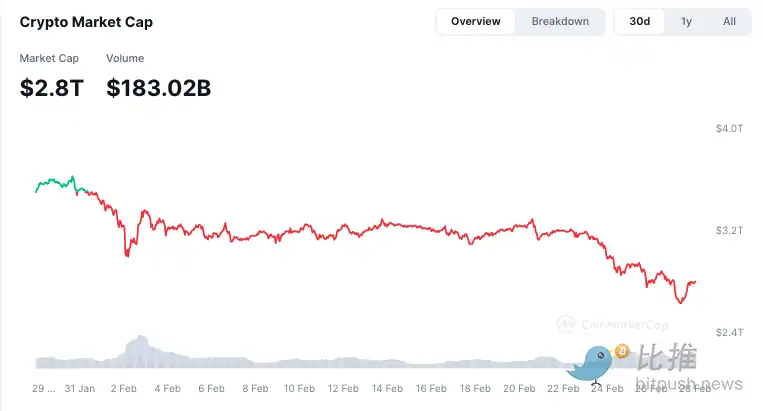
However, these measures were not enough to prevent the recent decline in Bitcoin's price and the overall negative sentiment in the crypto industry. As of the time of writing, the current Bitcoin price is $84,000, having fallen 18% since Donald Trump took office, nearly 23% from its all-time high, and the cryptocurrency's total market capitalization has dropped by 21%.
Kavita Gupta, Founder and General Partner of Delta Blockchain Fund, stated, "It feels like all the positive news in the cryptocurrency space has happened, and the industry's progress seems to be merely a product of a momentary enthusiasm by high-level political figures, lacking proper processes and due diligence... the situation could change at any moment, with sustainability in question."
Currently, three major forces driving the market down may further push it lower before stabilizing and beginning to recover. In fact, the crypto industry may not see sustained bullish momentum again until 2026.
Internal "Backlash"
There are many explanations for the recent decline, with the first being the behavior of cryptocurrency participants themselves.
For example, the industry found itself in an unfavorable position due to multiple meme coin dramas, such as $MELANIA and later $LIBRA, the latter even involving Argentina's President, Javier Milei, in a scandal. Now, the issuance and trading activity of meme coins in the entire industry are on the decline, raising doubts about their long-term sustainability. For instance, the peak number of new tokens issued in a day reached 66,471 on January 24, just six days after $TRUMP was launched. By February 27, the latest date for which full data is available, this number had dropped to 27,741, a 58% decrease.
GSR Research Director Brian Rudick, when discussing this data, stated: "Meme coins were once thought to be the fairest, most efficient form of speculation in the cryptocurrency space, but $LIBRA has shown that this is not the case. Now you see on-chain transaction volumes plummeting, [even though] meme coins are at the forefront, dragging down the entire cryptocurrency space."
Furthermore, the $1.5 billion hack of Bybit by North Korean hackers (the largest theft in cryptocurrency history) has once again raised questions about the safety of investing in cryptocurrency. Gupta pointed out: "These hacking incidents have led the outside world to believe that even after 10 years of development, this industry has not truly matured."
External Headwinds
All this negative sentiment within the industry is being amplified by investors' broader risk aversion.
Typically, a new government’s inauguration boosts consumer confidence, and business leaders initially welcomed Trump's election because of his pro-business mindset. However, multiple new data points show that consumer confidence is waning, possibly due to Trump's threats to impose 25% tariffs on trade partners like Canada, Mexico, and the EU.
The Conference Board's Consumer Confidence Index February report recorded its third consecutive monthly decline, hitting its lowest level since August 2021.
The University of Michigan's Consumer Sentiment Survey also shows a significant drop in consumer confidence. The report stated: "Consumer sentiment continued its decline from earlier in the month, dropping almost 10% from January. This decline is widespread across age, income, and wealth groups."
The report also mentioned: "Expectations for inflation in the next year have risen from 3.3% to 4.3%, the highest level since November 2023, and have seen abnormally large increases for two consecutive months. The current reading is well above the pre-pandemic range of 2.3%-3.0% for the past two years."
Rudick noted: "According to the latest data from the CME Fedwatch tool, the market expects two rate cuts this year. However, if these expectations are completely overshadowed by tariff issues, the traditional market's decline could surpass that of cryptocurrency."
How Low Could Bitcoin Go?
It's difficult to predict with certainty how far Bitcoin could drop from here.
Interactive Brokers Chief Strategist Steve Sosnick stated that even among commodities, Bitcoin is unique. "You know the supply and demand situations of crude oil, coffee, or cocoa. Bitcoin does not have a similar intrinsic demand. Its existence is purely for speculation or investment purposes."
However, Sosnick pointed out several technical charts that can give investors some insight into price levels to watch.
One of these charts is Bitcoin's 200-day simple moving average. At the current price, the asset is nearing its first test of this key indicator since a clear breakout in mid-October of last year. If this scenario occurs and the asset falls below $80,000, Sosnick believes the next threshold will be the "60,000 USDT high/70,000 USDT low range."

Despite investor sentiment being negative, according to the S&P 500 Volatility Index (VIX), the market has not reached a state of full-blown panic yet, with the VIX index still within a normal range over the past 12 months. Sosnick said, "The VIX has not reached extremely high levels, which suggests we may not be out of the woods yet, as rebounds often halt when the VIX spikes."
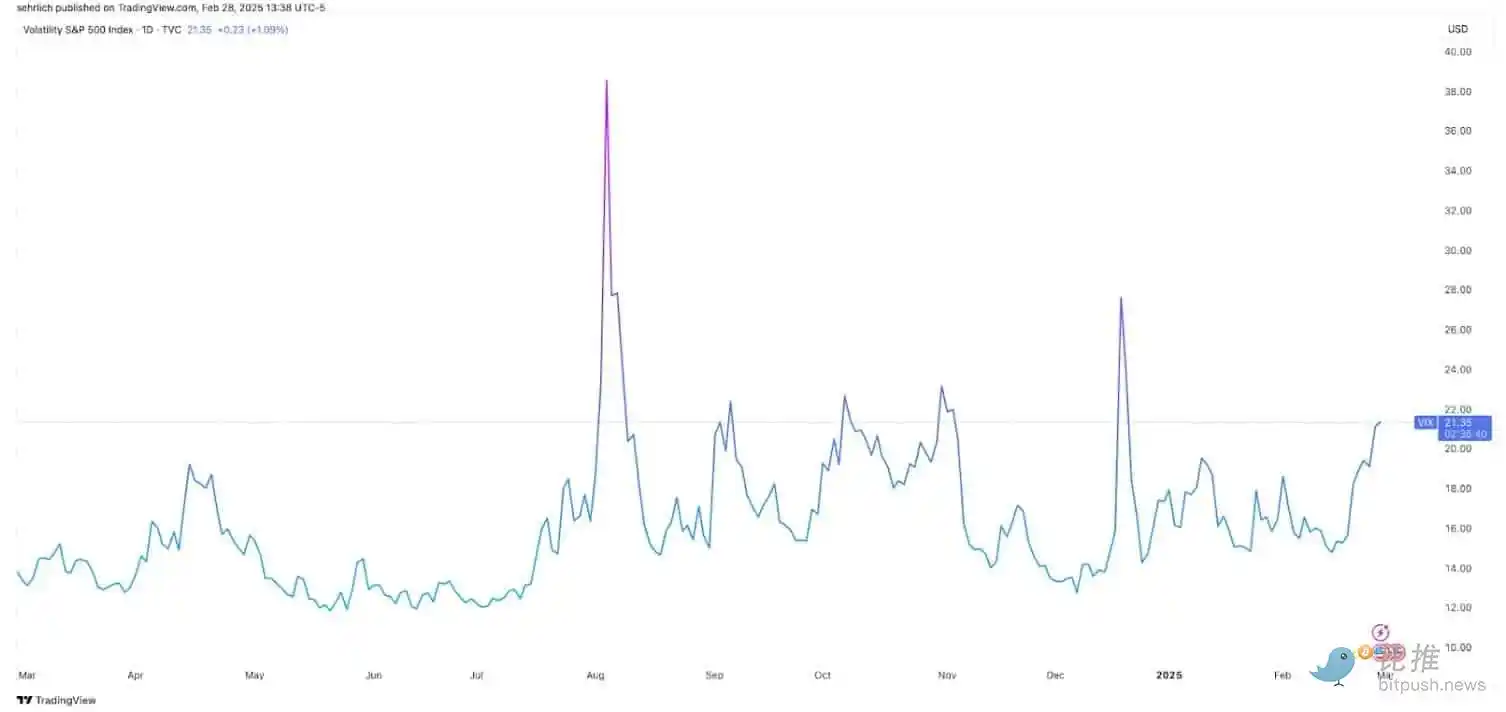
For Bitcoin, this means it may still see a decline as investors have not reached extreme levels of fear. For example, when the Bank of Japan raised interest rates and unwound yen carry trades, the VIX spiked in August; currently, the VIX is well below those levels.
Waiting for the Wind: 2026?
Given all these negative forces impacting Bitcoin's price, the cryptocurrency industry may need to wait until 2026 for Bitcoin and the entire industry to regain significant forward momentum. When asked about what types of internal or external factors could play a role in this process, the answer is twofold: strategic Bitcoin reserves or legislation definitively setting rules for the industry.
While the cryptocurrency community has been eager to build strategic Bitcoin reserves, the White House's executive order is looking to evaluate something different: a federal reserve, where the government would opt to hold Bitcoin acquired through enforcement actions rather than strategic reserves, where the government would purchase new Bitcoin. (However, many states are evaluating their own strategic reserves, though few have made meaningful progress.)
Rudick believes something akin to Bitcoin reserves could be beneficial for the industry, but it is far from guaranteed: "[Reserves have] always struck me as a low likelihood, but I do think Bitcoin easily hits $500,000. Even if we don't obtain it in the form of strategic Bitcoin reserves, I do believe the U.S. could create a sovereign wealth fund and accumulate Bitcoin."
But for Rudick, a more sustainable path of growth is enacting market structure legislation to allow regulated companies to legitimately enter the space, though he believes the industry will have to wait until next year to see meaningful progress: "[Legislation] might not happen until 2026. But in my view, [this is] so crucial because it's what institutional mass adoption needs."
As evidence, he pointed to a recent statement by Brian Moynihan, CEO of Bank of America, who said that if the industry's rules become clearer, his bank, which has been cautious about cryptocurrency, would consider launching a stablecoin. (At least one source close to Washington negotiations believes stablecoin legislation may not even be signed until 2025.)
But before that, the industry needs to stay steady to weather these adverse factors. After all, this sharp swing in investor sentiment is a big part of the risk of investing in cryptocurrency.
Sosnick summed up the current market situation in one sentence: "Market rises usually feel like taking the stairs, but when it falls, it's like taking the elevator. This time Bitcoin took the elevator to the top floor, and now it's taking the elevator back down to the basement. It's a highly volatile asset. If volatility works in your favor, that's great—everyone is happy to accept and enjoy it, but when volatility moves in the opposite direction, that's just too bad."
You may also like

Pantera Capital Partner: How Tokenization is Restructuring the Private Equity and Early Investment Ecosystem?

New York Proposes Stricter Stablecoin Issuer Rules Aligned With Federal GENIUS Act
NYDFS proposed stricter stablecoin issuer rules aligned with the GENIUS Act, covering reserves, custody, redemption timelines, audits, and capital buffers.
Every exchange is a "Universal Exchange."

The counterattack of traditional finance: Alliance chains are quietly reviving

CryptoQuant Says Bitcoin Profitable Supply Is Near 45% Pressure Zone as On-Chain Data Points to Market Repricing
CryptoQuant said Bitcoin’s profitable supply is nearing the 45% pressure zone, signaling rising market stress, unrealized losses, and a possible on-chain repricing phase.

Bitcoin Falls Below 200-Week Moving Average as On-Chain Data Shows Over Half of Supply in Loss
Bitcoin dropped below its 200-week moving average as on-chain data showed over 50% of circulating supply is now in loss, signaling rising market stress.

CFTC Reportedly Plans New Prediction Market Rules Focused on Manipulation Risk and Public Interest Review
The CFTC is reportedly preparing new prediction market rules focused on manipulation risk, public interest review, and retail trader protections.

Meet the new WEEX trial fund—your gateway to greater profits

WEEX Labs Lands at Dutch Blockchain Week: A Disruptive Crypto × AI Conversation Sets Sail in Amsterdam

SK Hynix Reportedly Plans U.S. ADR Listing as Early as August, With SEC Approval Possible in Late June
SK Hynix may pursue a U.S. ADR listing as early as August, with SEC approval reportedly possible in late June amid strong AI chip supply chain demand.

SpaceX vs Tesla vs xAI: Which Elon Musk Trade Has the Biggest Upside in 2026?
OpenAI Reveals It Has Confidentially Submitted an S-1 to the SEC, Keeping the Door Open for a Future IPO
On June 9, according to an OpenAI announcement, the company recently confidentially submitted a draft S-1 registration statement to the U.S. Securities and Exchange Commission (SEC), beginning the preliminary compliance process for a potential initial public offering. OpenAI said it chose to disclose this proactively because it expected the news might leak; however, the company has not yet set a specific listing timeline, and related arrangements may still take some time.

Latest research from 13 top universities including Cornell University: The current state, challenges, and misconceptions of the fusion of Crypto and AI
Deconstructing Anthropic: The Best AI Company, Possibly Also a Type of Organizational Invention
Apollo and Blackstone Reportedly Back $35 Billion Anthropic Chip Financing as Deal Details Remain Unclear
On June 9, according to currently available news alerts, Apollo and Blackstone Group participated in a $35 billion financing for an Anthropic “chip project.” Based on the original wording of the report, the funding has already been raised, but public information remains limited. The financing structure, use of proceeds, project entity, and whether Apollo and Blackstone participated through equity, debt, or project financing have not yet been disclosed.

Humanity Protocol Security Incident Escalates: More Than $31 Million Stolen From Related Addresses as Attacker Continues Selling H for ETH
On June 9, according to monitoring by Onchain Lens, more than $31 million has been stolen from addresses linked to Humanity Protocol, and the attack is still ongoing, with the hacker continuously swapping H tokens for ETH. Project founder Terence Kwok later confirmed the security incident on X, saying the issue involved a private key leak.

Bloomberg: As Bitcoin Weakens, Stablecoins and RWA Continue to Drive Expansion in Crypto Businesses
In June, Bloomberg reported that despite Bitcoin falling below $60,000 last week, wiping out about $235 billion in market value within seven days, and dropping close to 50% from last year’s peak, some core businesses in the crypto industry are still expanding, mainly in stablecoins, real-world asset tokenization (RWA), payments, and infrastructure. The report also noted that overall altcoin activity has contracted significantly: altcoin market capitalization has fallen from a peak of about $431 billion in November 2021 to around $170 billion, and among the tens of millions of tokens issued in recent years, fewer than 1,700 still maintain meaningful trading activity.

Galaxy Deep Research Report: How Hyperliquid's HIP-4 Upgrade Changes the Landscape of Prediction Markets?
Pantera Capital Partner: How Tokenization is Restructuring the Private Equity and Early Investment Ecosystem?
New York Proposes Stricter Stablecoin Issuer Rules Aligned With Federal GENIUS Act
NYDFS proposed stricter stablecoin issuer rules aligned with the GENIUS Act, covering reserves, custody, redemption timelines, audits, and capital buffers.
Every exchange is a "Universal Exchange."
The counterattack of traditional finance: Alliance chains are quietly reviving
CryptoQuant Says Bitcoin Profitable Supply Is Near 45% Pressure Zone as On-Chain Data Points to Market Repricing
CryptoQuant said Bitcoin’s profitable supply is nearing the 45% pressure zone, signaling rising market stress, unrealized losses, and a possible on-chain repricing phase.
Bitcoin Falls Below 200-Week Moving Average as On-Chain Data Shows Over Half of Supply in Loss
Bitcoin dropped below its 200-week moving average as on-chain data showed over 50% of circulating supply is now in loss, signaling rising market stress.


